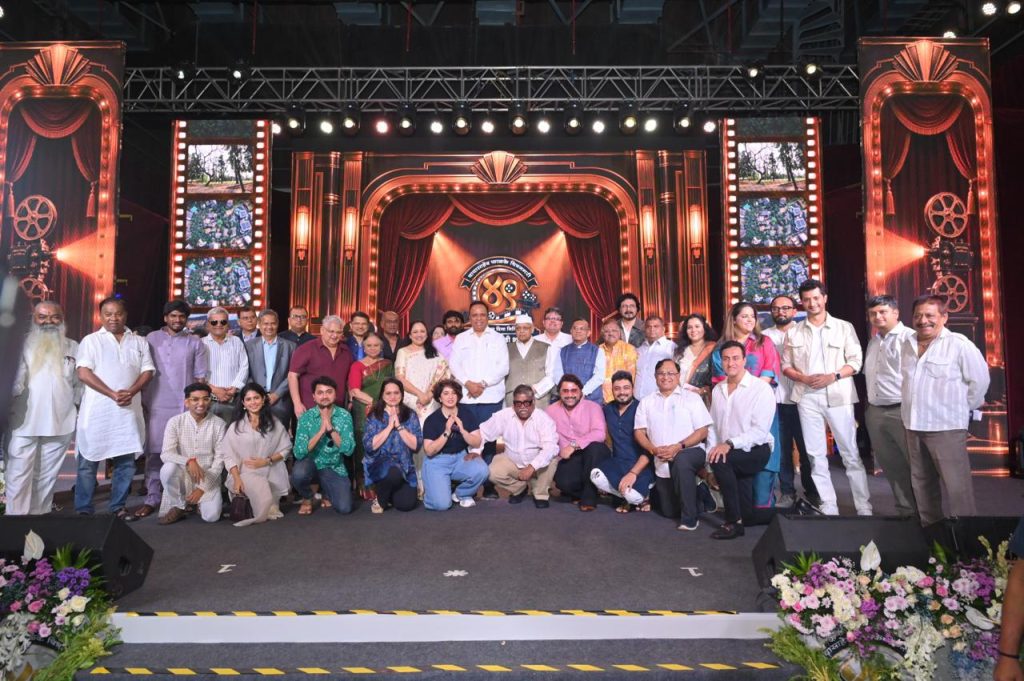
MUMBAI — Marking five decades of serving as the production backbone for Marathi cinema and the broader Indian entertainment sector, the golden jubilee year celebrations of Dadasaheb Phalke Chitranagari (Mumbai Film City) officially kicked off on October 1, inaugurated by Maharashtra’s Minister for Cultural Affairs, Adv.Ashish Shelar.
Organized jointly by the Department of Cultural Affairs, Government of Maharashtra, and the Maharashtra Film, Stage and Cultural Development Corporation (MFSCDC), the ceremony featured the unveiling of the official golden jubilee logo, the launch of a commemorative theme anthem, and the screening of an audiovisual retrospective documenting Chitranagari’s 50-year journey.
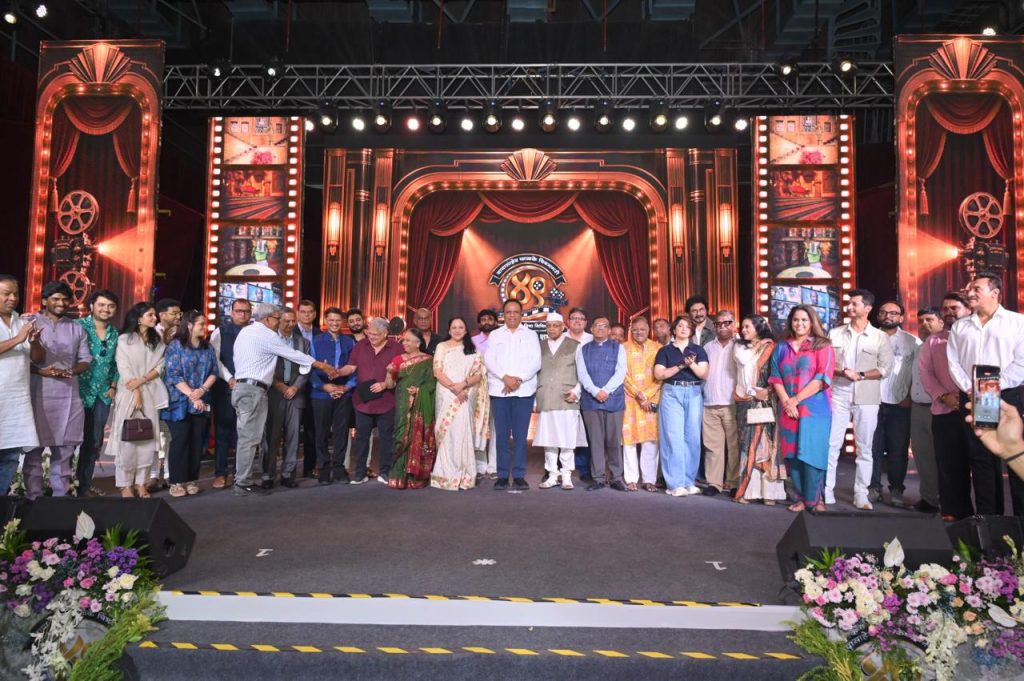
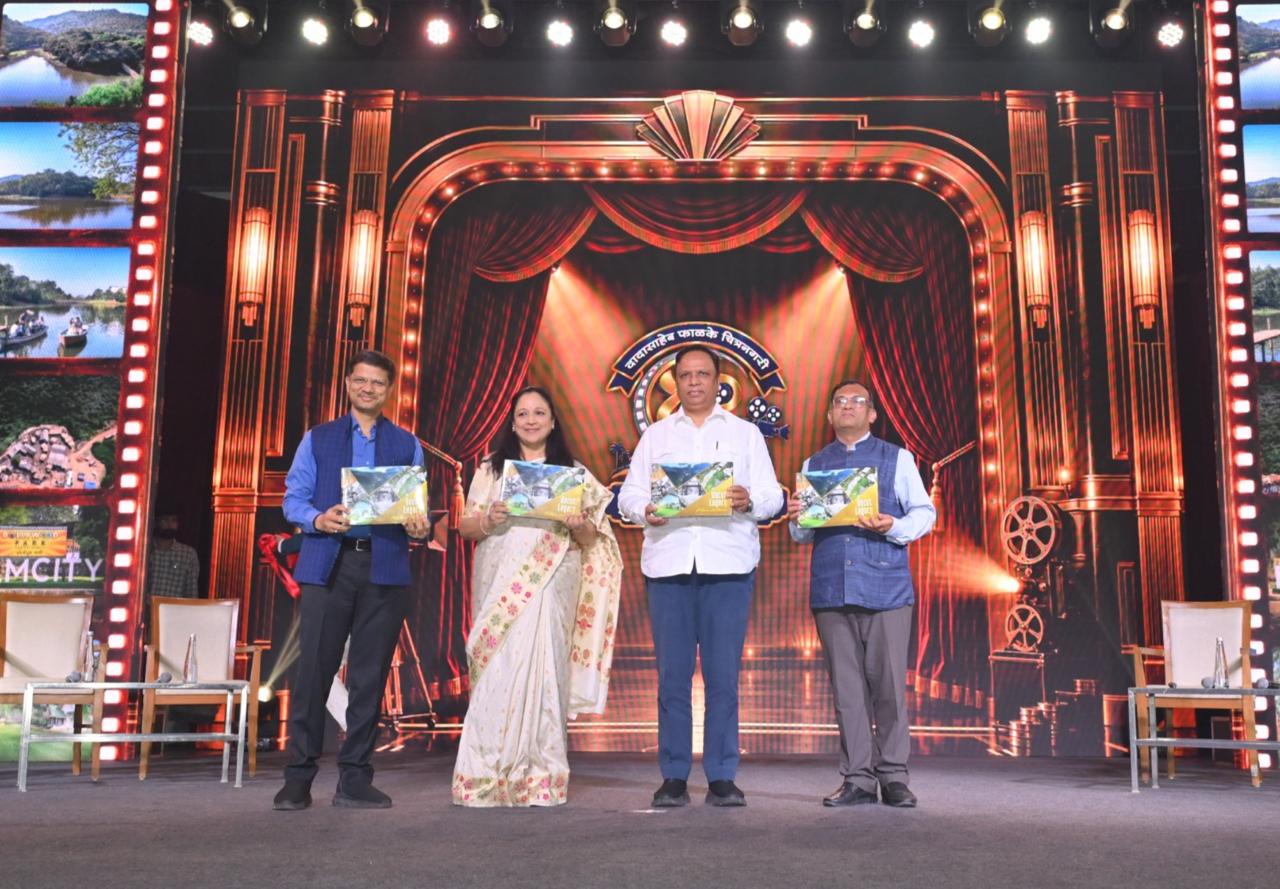
The event also saw the launch of an exclusive coffee table book capturing historical milestones, alongside the release of the periodical ‘Chitrapataka’. Several production houses and industry pioneers who contributed to the studio complex and Maharashtra’s cinematic heritage were felicitated.
Prominent dignitaries in attendance included Dr. Kiran Kulkarni (Secretary, Cultural Affairs Department), Swati Mhase-Patil (Managing Director, MFSCDC), and Prashant Sajanikar (Joint Managing Director, MFSCDC), alongside leading filmmakers, technicians, artists, and industry representatives.
Social Commitment & Revenue Contribution
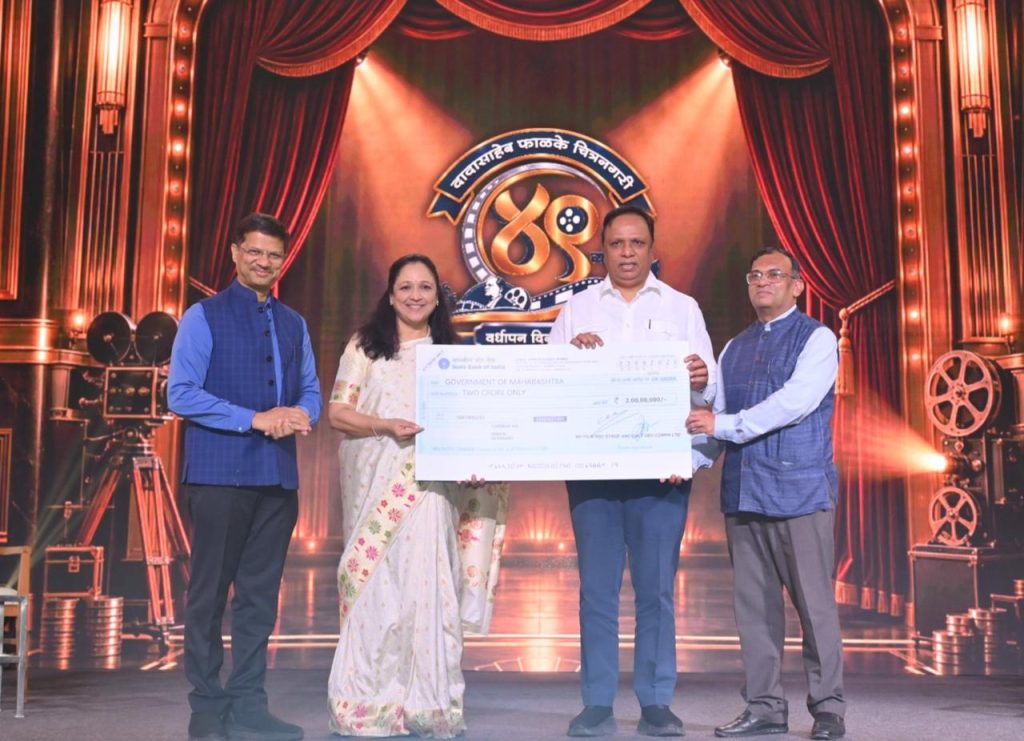
Demonstrating its commitment beyond entertainment, Chitranagari handed over a cheque of ₹5 lakh to the Chief Minister’s Relief Fund in light of drought conditions across parts of the state, marking its 49th foundation day. In addition, following its annual financial review, MFSCDC presented a dividend cheque of ₹2 crore from its profits to the state government. Managing Director Swati Mhase-Patil presented both cheques to Minister Adv. Ashish Shelar during the ceremony.
Modernization and Year-Long Roadmap
Spanning over 500 acres in Goregaon, Chitranagari has provided production facilities, outdoor locations, and sound stages for feature films, television shows, commercials, and digital streaming projects over the last half-century.
Entering its 50th year, the administration outlined plans to transform Film City into a state-of-the-art, globally competitive film hub equipped with modern infrastructure and post-production technology. The government plans to conduct artistic workshops, industry outreach, and cultural festivals across the coming year to engage domestic and international creators.